· Ferranvizoso Editorial Desk · Building Materials · 8 min read
Commercial Roof Replacement: Signs, Materials, Costs and Timeline
Learn the warning signs, material options, realistic costs, and project timeline for commercial roof replacement and how to choose the right contractor.
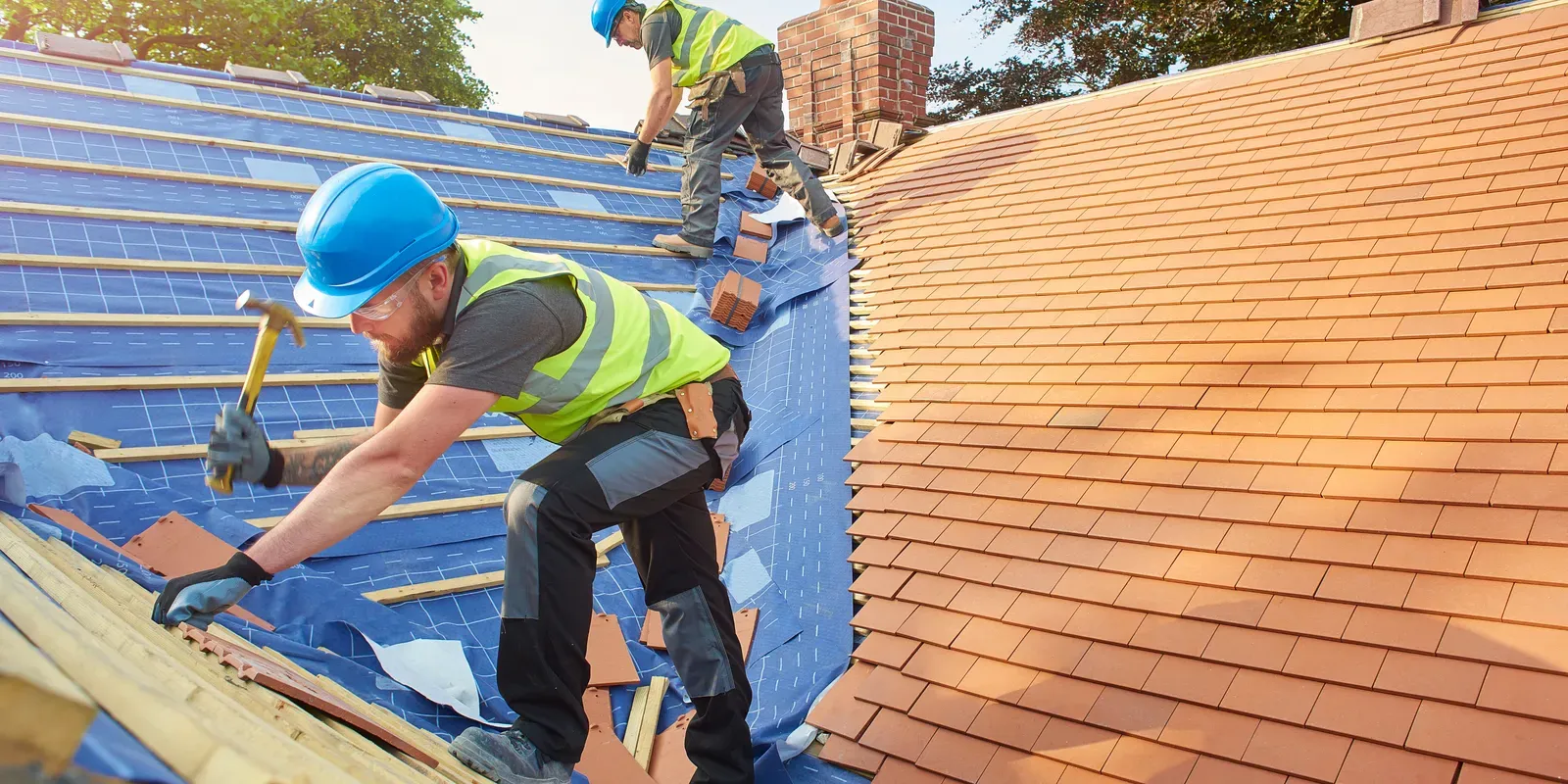
Replacing a commercial roof is one of the biggest capital decisions a property owner will make, and getting the call wrong in either direction is expensive. Replace too early, and you have spent money a repair would have covered. Wait too long, and water finds its way into insulation, decking, and the building below. Below you’ll find the warning signs, how repair differs from restoration and replacement, the main materials, what it all costs, and how long the work takes.
Signs Your Commercial Roof Needs Replacement
A handful of conditions tend to separate roofs that still have useful life from roofs that are done. None of these show up in isolation, and taken together they tell a clearer story than any single symptom.
Recurring or worsening leaks
A leak that reappears after being patched, or shows up in a new spot each time, usually means the problem isn’t one bad seam. It points to a membrane that has lost its integrity broadly, which repair crews can chase for years without resolving.
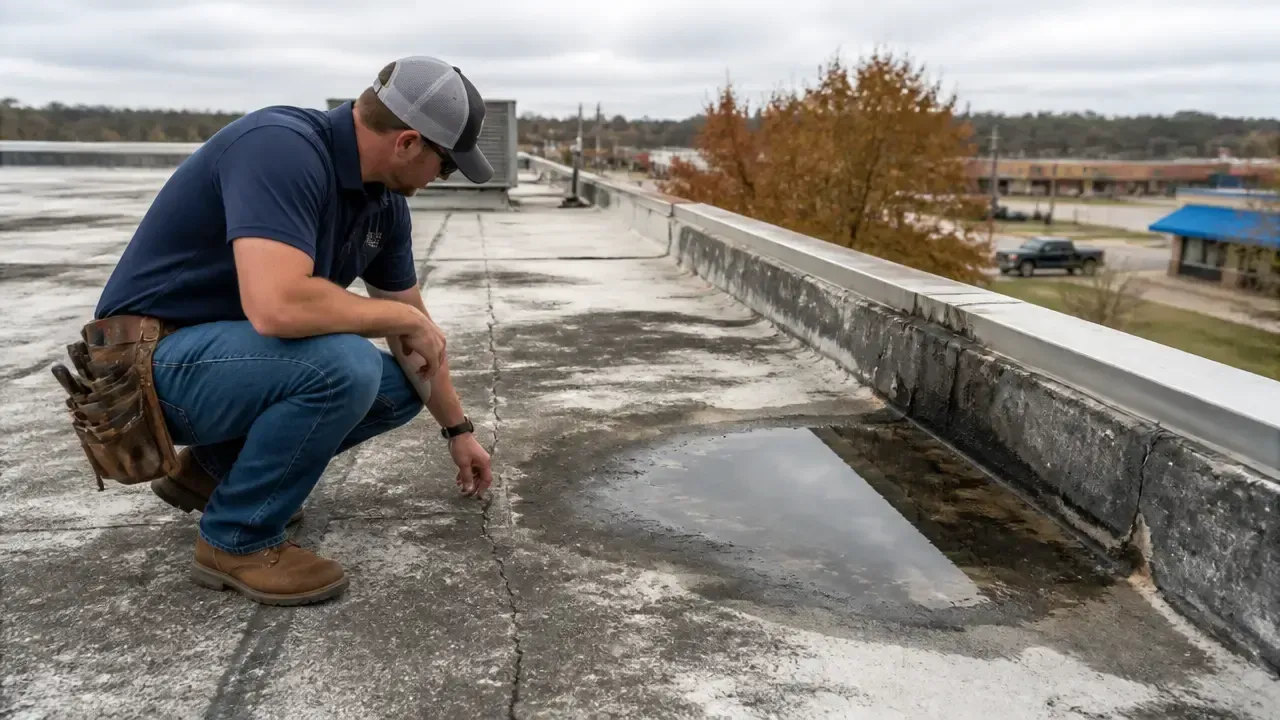
Ponding water and drainage failure
Water that sits on a low-slope roof for more than 48 hours after rainfall accelerates membrane breakdown, adds significant structural load, and is often a sign that the roof deck itself has begun to sag. Ponding rarely fixes itself; it tends to get worse as the deck deflects further under the standing weight.
Membrane, seam, or flashing deterioration
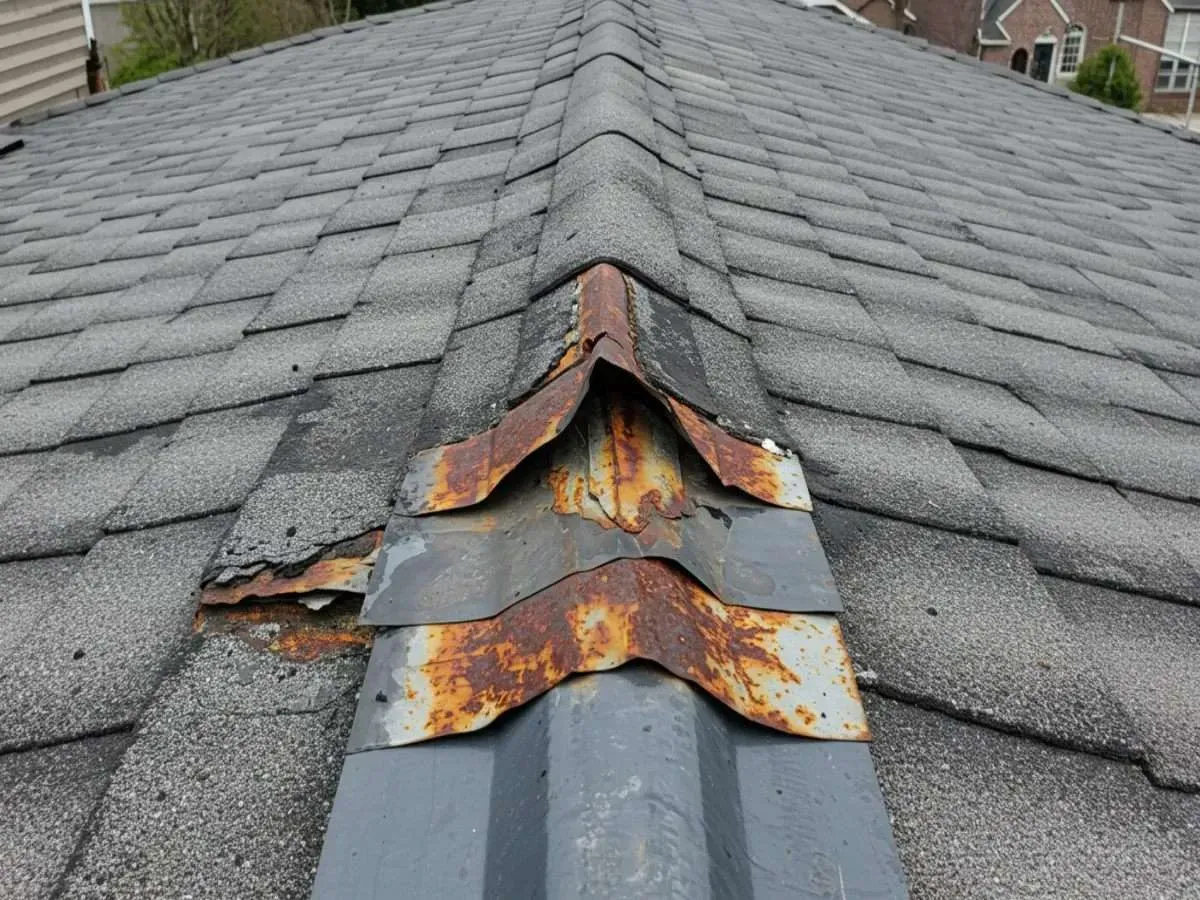
Cracking, blistering, or shrinking membrane, along with failing seams and pulled-away flashing at parapets and penetrations, signals a system nearing the end of its service life rather than an isolated defect.
Interior water damage and musty odors
Stained ceiling tiles, warped drywall, or a persistent musty smell suggest moisture has already reached the building interior, which often means insulation above the deck is wet too, even in spots that look fine from below.
Roof age and escalating repair costs
Most commercial roofs last somewhere between 15 and 30 years. An older industry study that NRCA has cited put the average at about 17. Metal lasts longer, and a well-kept roof can beat the average. Still, if repair bills show up every few months and the roof is near the end of its range, take that seriously.
Repair, Restoration, or Full Replacement: How to Tell Which You Need
These three options get lumped together in a lot of roofing content, but they solve different problems and cost very different amounts.
Repair
This fits a localized, isolated issue: a puncture, one failed seam, a cracked pipe boot, on a roof that is otherwise sound. It’s the right call when the rest of the system is dry and structurally fine.
Restoration, recovery, or recoat
This extends a roof’s life by adding a new membrane layer, fluid-applied coating, or recovery system over the existing roof. This only works when the existing system is structurally sound, dry, and limited to one layer under most building codes. Wet insulation or multiple existing roof layers usually rule this option out entirely, which is why a core sample or moisture scan is the way to confirm eligibility rather than guessing from the surface.
Replacement
This means full tear-off and new installation. It’s appropriate once damage is systemic across the roof, insulation has absorbed water, or the system is at or near the end of its expected service life.
| Option | Typical Roof Condition | Cost Relative to Replacement | How Long It Lasts |
|---|---|---|---|
| Repair | Localized, isolated damage on an otherwise sound roof | Low | Short-term fix; doesn’t extend overall system life |
| Restoration / Recover | Structurally sound, dry, single existing layer | Moderate (often well below full replacement) | Can add meaningful years, but less than a new system |
| Full Replacement | Systemic damage, saturated insulation, or near end of service life | Highest | Resets the clock to a full new service life |
Commercial Roofing Materials Compared
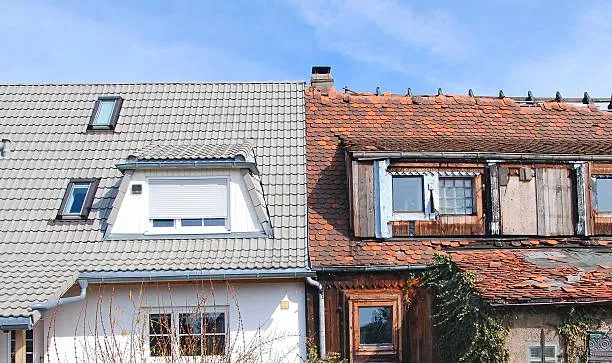
Material choice depends on building type, climate, budget, and how long the owner plans to hold the property. Here’s how the common commercial systems stack up.
TPO (Thermoplastic Polyolefin)
TPO is a heat-welded single-ply membrane that’s become the most widely installed low-slope commercial system in the US, largely because it balances reflectivity, cost, and installed performance well. Typical lifespan runs 20 to 30 years. It suits a broad range of flat and low-slope buildings, particularly where energy-code reflectivity requirements matter.
EPDM (Rubber Membrane)
EPDM is a rubber membrane with a long track record, usually rated for 20 to 35 years. The EPDM Roofing Association, an industry group, says a well-installed and well-maintained roof should hit about 38, and some reach 40 to 50. It handles temperature swings well. Black membrane holds heat, though, so it fits best where cooling costs aren’t a worry.
PVC (Polyvinyl Chloride)
Another heat-welded single-ply option, generally rated 20 to 30 years, with strong resistance to chemicals, grease, and oils. That makes it a frequent choice for restaurants and manufacturing facilities with rooftop exhaust or chemical exposure.
Modified Bitumen and Built-Up Roofing (BUR)
These are the older, multi-ply asphalt-based systems, generally lasting 15 to 25 years. They remain common on smaller buildings and in retrofit situations where a familiar, heavier-duty system is preferred over single-ply membranes.
Metal Roofing Systems
Standing seam and exposed-fastener metal roofs are the longevity leader, typically lasting 40 to 60 years. They cost more upfront but suit owners planning to hold a building for decades, and they perform well on steeper commercial roof profiles where membrane systems aren’t an option.
| Material | Typical Lifespan | Relative Cost | Best Suited For |
|---|---|---|---|
| TPO | 20–30 years | Low–Moderate | General low-slope buildings; energy-code reflectivity |
| EPDM | 20–35 years (industry group says 38 with good upkeep) | Low–Moderate | Temperature extremes; buildings without reflectivity requirements |
| PVC | 20–30 years | Moderate | Restaurants, chemical or grease exposure |
| Modified Bitumen / BUR | 15–25 years | Moderate | Smaller buildings; familiar retrofit situations |
| Standing Seam Metal | 40–60 years | Higher upfront | Long-term ownership; steeper roof profiles |
How Much Does Commercial Roof Replacement Cost?
Installed prices for a commercial roof replacement run from about $4 to $18 per square foot nationwide, and straightforward jobs often fall between $5 and $12. That spread reflects material choice, tear-off scope, and regional labor costs. It’s a planning range, not a quote; only a project-specific inspection produces an accurate number for your building.
What Drives the Price Per Square Foot
Several line items combine to produce the final bid, and a reputable contractor should break them out rather than hand over one blended number:
• Material and membrane cost, which varies by system type
• Tear-off and disposal of the old roof, which commonly adds $1 to $3 per square foot on its own
• Insulation and cover board
• Deck repair, which can’t be fully priced until tear-off exposes the deck condition, and is a common source of mid-project cost increases
• Labor
• Permits and inspections
• Access equipment such as cranes or lifts, where the building requires them
Occupied buildings cost more to re-roof. Phasing, after-hours shifts, and tenant coordination all eat time, so ask for that as its own line in the bid.
Why National Averages Only Go So Far
Regional labor rates, local energy codes covering insulation R-value and cool-roof reflectivity, and how accessible the roof is can all move an actual bid meaningfully above or below the national range. Many jurisdictions also have their own permitting requirements that affect both cost and schedule, so check local code requirements for your building before assuming a number from this article applies directly. A professional inspection and a written, itemized quote are the only reliable source of a project-specific figure.
The Commercial Roof Replacement Process, Step by Step
A properly run replacement follows a consistent sequence:
1. Inspection and documentation, including photos and, where needed, a moisture scan or core sample
2. Material and system selection, with scope approved in writing before work starts
3. Site preparation and tear-off of the existing roof
4. Roof deck inspection and repair
5. Insulation and new membrane or system installation
6. Flashing, edge metal, and drainage detailing
7. Final inspection, documentation, and warranty registration
Conditions discovered after tear-off, wet insulation, deteriorated decking, or multiple old roof layers are common rather than rare. A good contractor discusses and prices these contingencies before work begins instead of treating them as a surprise mid-project.
How Long Does Commercial Roof Replacement Take?
It depends on the roof. A small one can be done in a few days, a mid-sized one often takes a few weeks, and a big or complicated one can stretch to a few months, especially when the building stays open.
A few factors routinely push timelines longer:
• Roof size and overall square footage
• Weather, since rain halts tear-off and wind halts material handling, while temperature and humidity affect adhesive cure and seaming
• Material availability and manufacturer lead times
• Phasing required to keep a building operational during construction
• The extent of deck repairs discovered once tear-off begins
Every building is different, so treat these numbers as ballparks. Ask your contractor for a written schedule.
Choosing a Commercial Roofing Contractor
Before you sign with anyone, run through these checks:
• Verify licensing, insurance, and manufacturer certification specific to the system being installed
• Ask for local references, not just project photos
• Get a written scope, not just a price, itemizing tear-off, deck repair pricing and approval process, materials, warranty terms, and schedule
• Collect multiple itemized quotes rather than comparing bottom-line totals alone
• Compare warranty terms carefully: manufacturer material warranties, workmanship or labor warranties, and full-system NDL (No Dollar Limit) coverage all mean different things
The lowest bid and the best value are frequently not the same thing, especially once you account for what’s excluded from a stripped-down quote.
A professional inspection, twice yearly in spring and fall plus after major storms, is the recommended standard according to NRCA, and it remains the necessary first step before any cost or timeline estimate for your specific building becomes reliable.
Frequently asked questions
How do I know if my commercial roof needs to be replaced instead of repaired?
Look at whether the damage is systemic or localized. Isolated punctures or single failed seams on an otherwise sound, dry roof usually call for repair. Saturated insulation, roof age near or past its expected service life, and escalating repair costs point toward replacement.
How much does commercial roof replacement cost per square foot?
About $4 to $18 per square foot installed, nationally. Simpler projects often fall between $5 and $12. Your own number only comes from an inspection and a written quote.
How long does a commercial roof replacement take?
A few days for a small roof, several weeks or more for a big one. Weather, phasing around business hours, and deck damage found during tear-off can stretch that further.
Can a commercial roof be replaced without shutting down the business?
In most cases, yes, through phased work zones, safety barriers, and scheduling around operating hours. Expect some noise, restricted rooftop or perimeter areas, and deliveries to plan around even when the building stays open.
What is the best roofing material for a flat commercial roof?
There isn't a single best material for every building. The right choice depends on climate, chemical or grease exposure, foot traffic, budget, and how long you plan to own the property, which is why the comparison above is organized by those factors rather than a single winner.
Can a new roof be installed over the existing one instead of full tear-off?
Sometimes. Recover or overlay systems require a single existing roof layer, dry insulation, adequate structural capacity, and code compliance. A core sample or moisture scan is how a contractor determines whether your roof actually qualifies.
What should a commercial roofing warranty cover?
Compare manufacturer material warranties, workmanship or labor warranties, and full-system NDL (No Dollar Limit) coverage. Each protects against different failure points, so terms matter as much as price when evaluating competing bids.