· Ferranvizoso Editorial Desk · Interior Design · 10 min read
19 Living Room Curtain Ideas for a Brighter, Cozier Space
Discover 19 living room curtain ideas for brighter, cozier rooms: sheer, blackout, velvet, and layered styles, plus tips on color, fabric, and length.

The right living room curtains do more than cover glass. They decide how daylight lands on the floor at 10 a.m., how the room feels at 8 p.m., and whether a corner reads as open or boxed in. Searching “living room curtains” usually returns a blur of near-identical photos, so this list sticks to 19 genuinely different ideas, each tied to a clear payoff: more light, more warmth, more privacy, or a better sense of space.
Pick the one that solves your biggest problem first. Then borrow from the rest.
Before You Choose: The Three Main Curtain Categories
Sheer Curtains
Sheer curtains, usually voile or linen sheer, let daylight pass through and soften it, but they offer little privacy at night and almost no insulation.
Mid-Weight Curtains
Mid-weight curtains in cotton or linen filter light, hide the view from outside, and add texture.
Blackout Curtains
Blackout curtains carry a thick lining that blocks most light and helps buffer temperature swings, though they can feel heavy in a room that already lacks sun.
Nearly every idea below draws on one of these three, or on a smart combination.
19 Living Room Curtain Ideas
1. Hang Sheers to Flood the Room With Soft Daylight
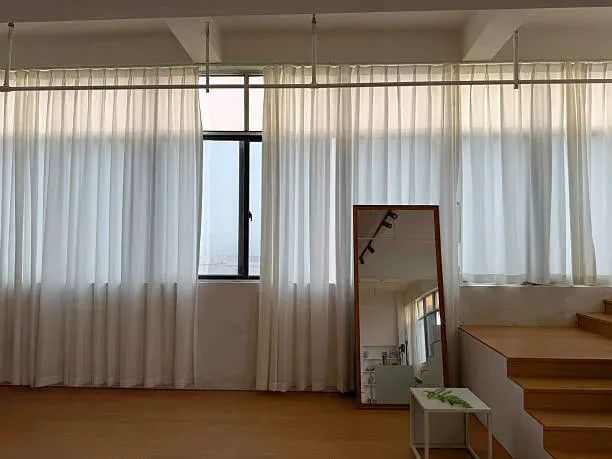
Sheer living room curtains diffuse light instead of blocking it, so a sunny window glows rather than glares. White or ivory voile works best, and the thin fabric also softens the hard edges of the window frame. Expect daytime privacy only. Once the lamps come on, neighbors can see in unless something heavier hangs behind the sheers.
2. Take Drapes From Floor to Ceiling for Height and Drama
Mounting drapes near the ceiling and letting them fall to the floor pulls the eye upward, which makes a standard eight-foot wall feel taller. Choose a fabric with enough weight to hang in clean vertical lines. If your room has crown molding, hang the rod an inch or two below it. These living room drapes work especially well on a wall with a single, modest window.
3. Layer Sheers Behind Heavier Drapes for Flexible Light
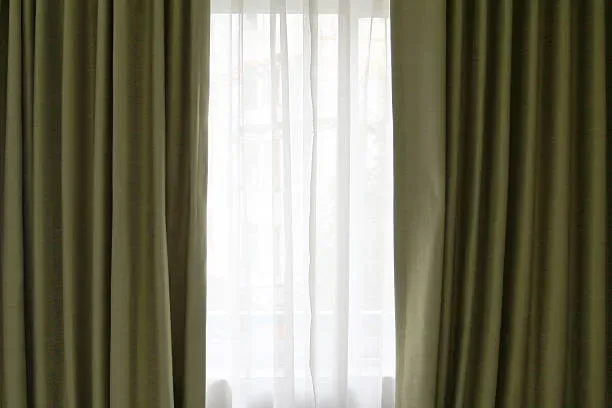
A double rod or double track lets you run sheers close to the glass with drapes in front. In the morning, open the drapes and keep the sheers for gentle light. At night, close both for privacy and a snug, insulated feel. It is the most adaptable setup on this list, and it solves the sheer-versus-blackout debate by letting you have both.
4. Use Blackout Curtains to Tame Glare and Lock In Evening Coziness
Blackout living room curtains are not just for bedrooms. If afternoon sun washes out your TV or west-facing glass turns the room into a greenhouse, a lined blackout panel fixes both. Draw it at dusk, and the room feels enclosed and quiet. During the day, push the panels fully aside so the room keeps its brightness.
5. Choose Velvet for Warmth, Texture, and Quieter Rooms
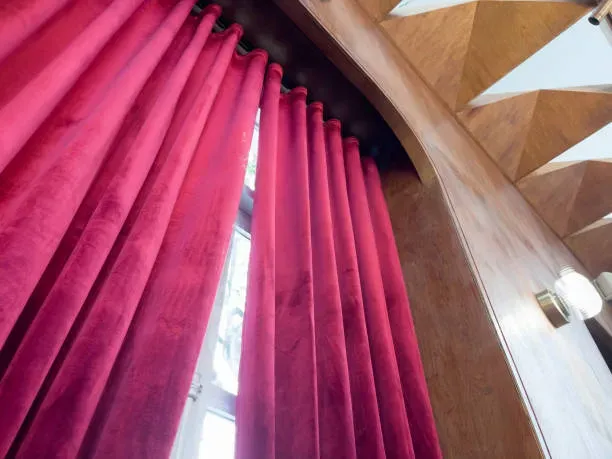
Velvet is heavy, so it blocks light, absorbs echo, and gives a room a plush, finished feel. Deep green or burgundy looks stunning in a living room used mostly in the evening. In a dim room, though, dark velvet can swallow what little light there is. Go with oatmeal, dusty rose, or soft sage instead.
6. Go With Linen Living Room Curtains for Relaxed, Natural Texture
Linen turns daylight into a warm, slightly uneven glow and falls in loose, lived-in folds that never look stiff. It wrinkles, and that is part of the appeal. For more privacy, pick a lined version in flax, natural, or white. Unlined linen is lovely but lets plenty of shadow and silhouette through.
7. Keep Colors Neutral to Open Up a Small or Low-Light Room
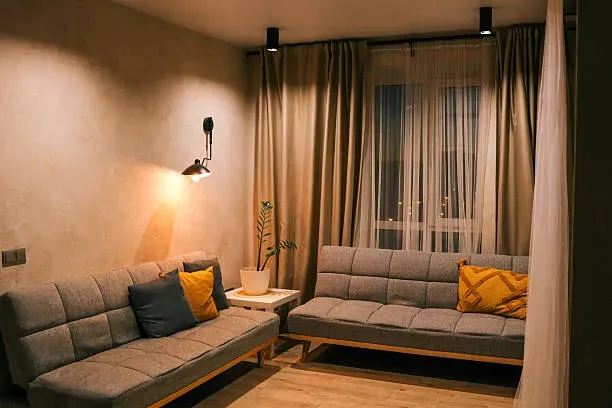
Beige, oatmeal, soft gray, and white reflect more light than deep, saturated shades, so the room reads larger and brighter. Use one tone across every window for a calm, continuous look. Texture matters here: a slubby weave or a subtle linen texture keeps neutral living room curtains from feeling flat.
8. Make a Deliberate Statement With Saturated Color
Rust, navy, emerald, and mustard turn curtains into the focal point of the room. Keep the sofa, rug, and walls quieter so the color has room to breathe. Because deep shades absorb light, this idea works best in a room with strong natural light, or as a way to make a bright room feel richer and cozier at night.
9. Match Curtains to the Wall Color for a Taller, Seamless Look
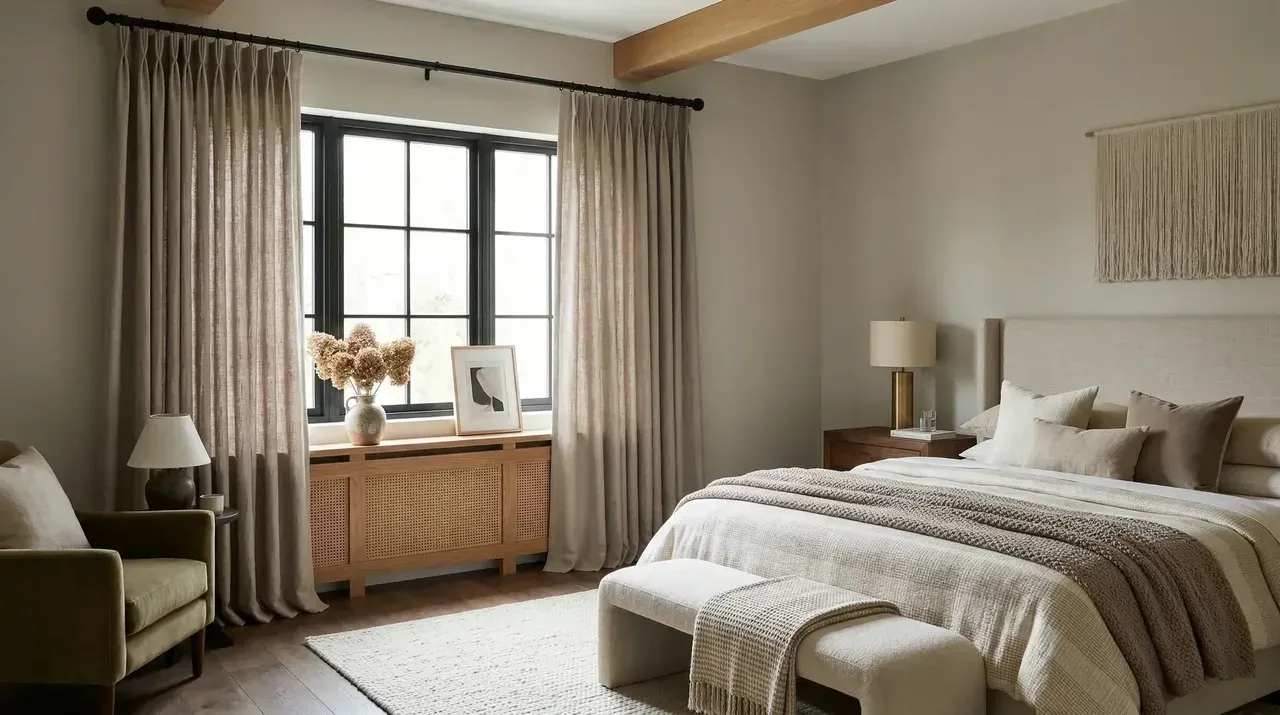
When curtains and walls share the same color, or sit one shade apart, the window edges fade, and the wall reads as one tall, uninterrupted surface. This tonal approach calms a room with awkwardly placed windows. It also pairs well with textured fabric, which keeps the monochrome look from turning flat.
10. Add Stripes, Botanicals, or Geometrics for Personality
Pattern brings energy that solid living room curtains cannot. Vertical stripes stretch the wall, botanical prints soften a modern room, and geometrics add structure. If your rug or pillows already carry a pattern, choose a curtain pattern in a different scale. Keep the background light so the print adds interest without darkening the room.
11. Hang Rods High and Wide to Enlarge the Window
Mount the rod a few inches above the frame and let it extend 4 to 8 inches past each side. When the curtains are open, the panels rest on the wall instead of covering the glass, so the full window lets in light and looks bigger. Living room curtains look larger and let in more light with this one change, and it costs almost nothing.
12. Get the Length Right: Floor-Length, Puddle, or Sill-Length
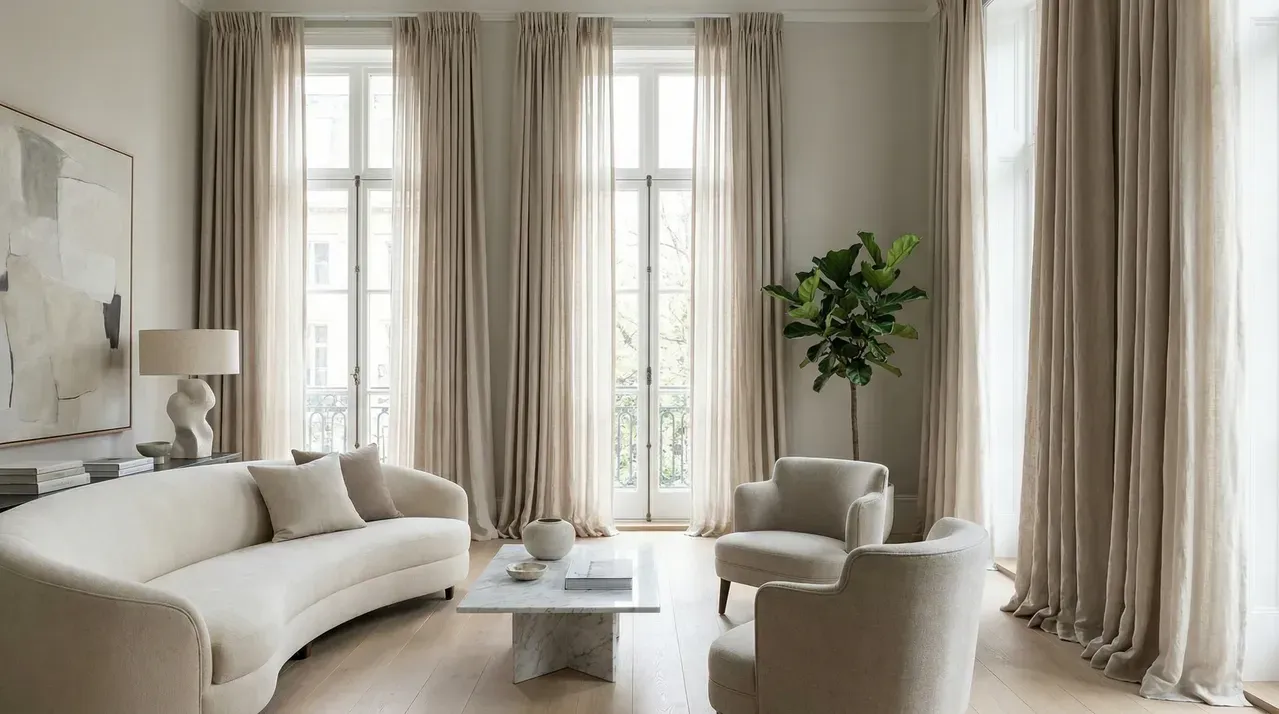
Panels that just brush the floor, or hover a fraction above it, look tailored. Puddle length adds a few inches of pooled fabric for a formal, romantic feel, though it collects dust and suits low-traffic rooms. Sill-length is the practical pick when a sofa, radiator, or desk sits under the window. Skip the awkward middle ground, because curtains that stop a few inches below the sill look like a mistake.
Does Curtain Length Affect Energy Efficiency?
For energy efficiency, the U.S. Department of Energy recommends hanging drapes as close to the window as possible and mounting them tight against the wall or ceiling (for example, with a sealed track or Velcro edging), since minimizing the air gap between fabric and glass is what actually helps reduce heat exchange; length matters less here than how snugly the treatment is sealed.
13. Keep Modern Rooms Clean With Minimal, Track-Hung Panels
Solid-color panels on a slim rod or ceiling track suit contemporary and minimalist spaces. Grommet or wave-style headings glide easily and stack tightly, so the window stays clear when the curtains are open. Skip the trim and tassels. Clean lines keep the room feeling light, and a good track hides all the hardware.
14. Choose Pinch Pleat Drapes for a Classic, Polished Look
A pinch pleat gathers fabric into tailored folds at the top, so the panels hang in even, structured waves. That makes it a natural fit for traditional and transitional rooms. Pair mid-weight, lined drapes for living room windows with a rod and rings. When closed, the fullness gives excellent coverage and a rich, finished look.
15. Bring in Farmhouse Living Room Curtains in Natural Fibers
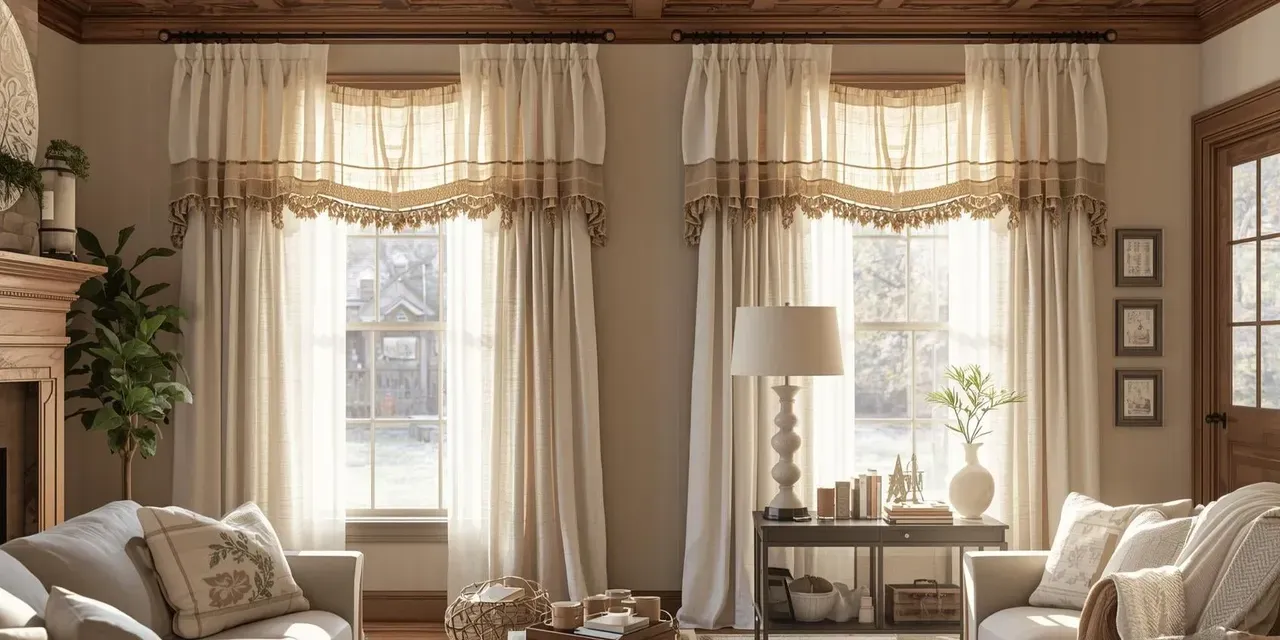
Cotton or linen in cream, white, or a soft check gives a farmhouse room its easy warmth. Hang them from a plain wood or black iron rod, using a rod pocket or tab-top heading for a casual drape. The fabric filters daylight gently, and the slightly rumpled texture makes the whole room feel welcoming.
16. Pair Curtains With Woven Wood or Roman Shades
Let a shade handle the daily light and privacy, and let the curtains frame it. Woven wood adds warm, organic texture, while a Roman shade keeps a softer, tailored look. Raise the shade for full brightness, and the curtains still dress the window. Plain blinds work the same way when you want precise control without heavy drapery.
17. Dress Large Windows and Sliding Doors With Wide, Stackable Panels
Big glass needs generous fabric, so plan for living room curtains totaling roughly twice the width of the window for proper fullness. Use a traversing rod or track so you can open a sliding door easily, and stack the panels beyond the frame. Light, lined fabric controls glare without making a wall of glass feel closed off.
18. Use Proportion Tricks for Small Windows and Small Rooms
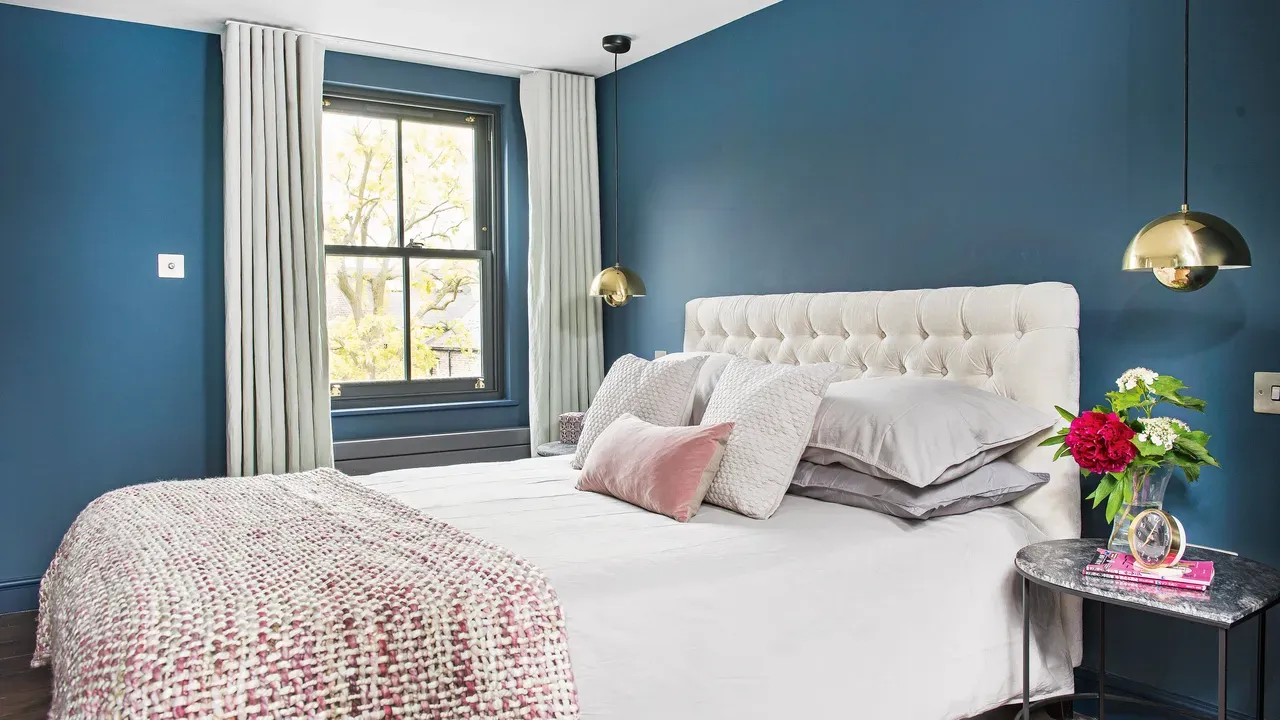
Shopping for window curtains for living room spaces with short windows? Hang the rod close to the ceiling to fake extra height, and choose panels wider than the glass to fake extra width. Stick with light colors and simple headings. Heavy fabric and busy trim eat up wall space that a small room cannot spare.
19. Add Dark Hardware for Definition Against Light Walls
A matte black or bronze rod against white or cream walls draws a crisp line and gives a neutral room some backbone. Matching the hardware to the wall color does the opposite and keeps things quiet and minimal. Whichever way you go, echo the finish somewhere else in the room, such as a lamp base or cabinet pulls.
Living Room Curtains FAQ
What curtain color makes a living room look brighter?
White, ivory, cream, and soft light gray reflect the most light. Pair them with sheer or light-filtering fabric, and hang the panels clear of the glass so they do not block the window when open.
Should living room curtains touch the floor?
They should either skim the floor or stop about half an inch above it. A slight puddle gives a more formal look. If furniture or a radiator sits below the window, sill-length is the better choice.
Can you mix sheer and blackout curtains in the same living room?
Yes. Hang the sheers closest to the glass and the lined or blackout drapes in front, using a double rod or double track. Open the drapes by day for soft light, and close both at night for privacy and warmth.
How high should curtain rods be hung in a living room?
Mount the rod several inches above the window frame, or close to the ceiling if you want to add height. Extend it 4 to 8 inches beyond each side so the panels can clear the glass. With crown molding, leave an inch or two beneath it.
Final Thoughts
Start with the problem that bothers you most. If glare is the issue, lined drapes or blackout panels will help. If the room feels dim, try sheers, pale neutrals, and a rod hung high and wide. Whichever direction you take, good living room curtains work hardest when length, height, and fabric weight agree with one another. Try one idea, live with it for a week, and adjust from there. Small changes at the window add up quickly. When the windows are settled, finish the walls: our dining room wall art ideas use the same light-first thinking, and the full interior design collection has more room guides.