· Ferranvizoso Editorial Desk · Interior Design · 9 min read
11 Japanese Bedroom Ideas for a Calm, Zen Retreat
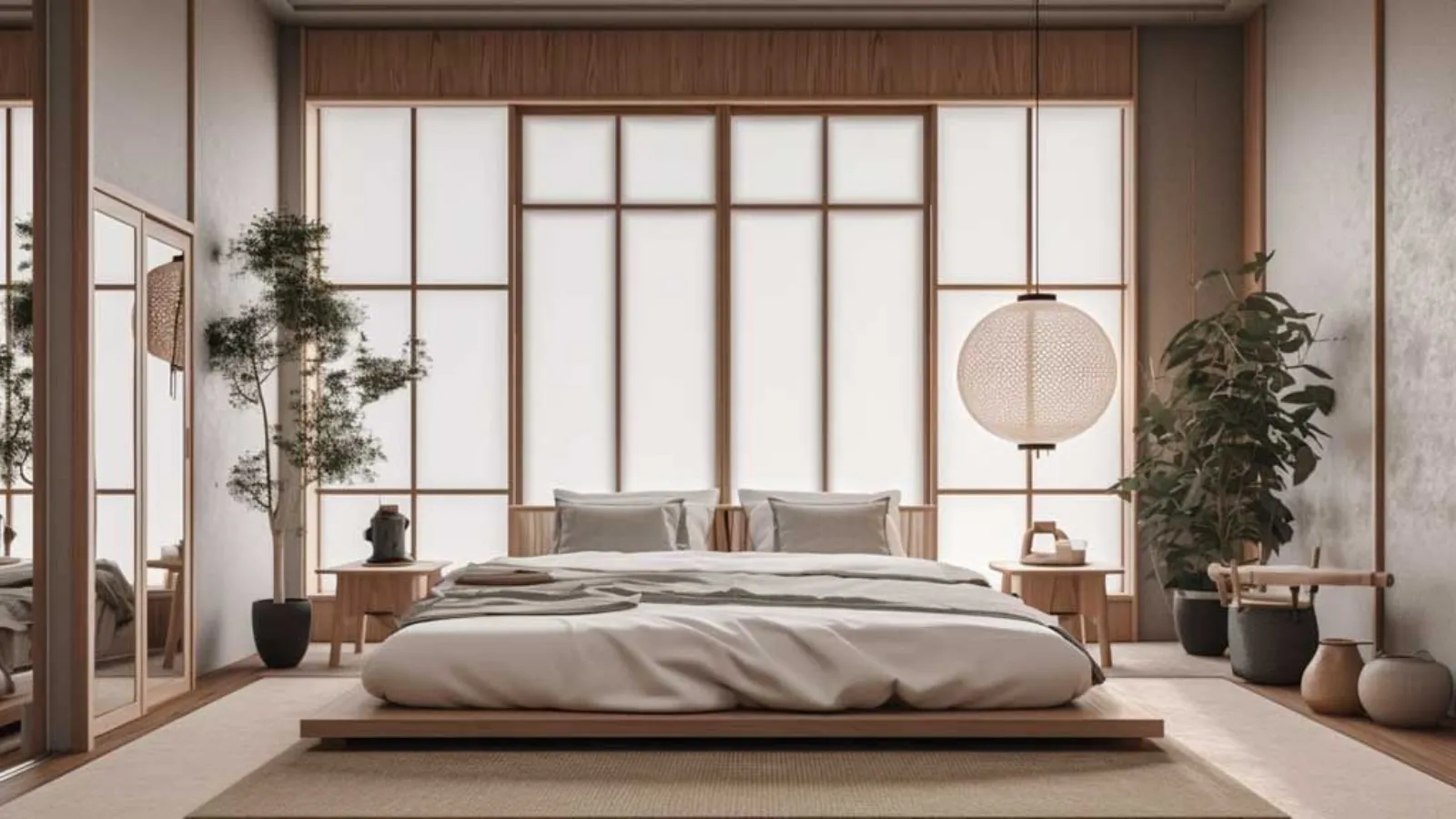
A Bedroom That Actually Lets You Rest
Ever walked into your bedroom after a long day and felt even more tired just looking at it? That’s the cue. A Japanese bedroom isn’t a trend you buy into. It’s a quieter way of arranging a room so your eyes and your nervous system finally get a break.
This isn’t about one aesthetic choice. It’s a handful of small, deliberate decisions, working together, that turn a cluttered room into something closer to a Zen retreat. Some of these ideas take a weekend. Others take an afternoon and a small budget. Both kinds are in this list.
Traditional Roots, Flexible Rules
Two ideas do most of the heavy lifting in Japanese design: wabi-sabi and ma. Wabi-sabi is the appreciation of things that are imperfect, weathered, or plainly made; think visible wood grain or a slightly uneven ceramic cup, rather than things polished to a shine. Ma is the opposite of clutter: it’s the empty space between objects, treated as part of the design instead of a gap waiting to be filled.
Neither of those is the same thing as generic “Zen minimalism.” A true Japanese bedroom style borrows from a real tradition, the washitsu, a room built around tatami flooring, sliding paper screens, and a futon laid out at night and put away by morning. The Smithsonian’s National Museum of Asian Art is a good place to see Japanese art and design in person. You don’t need all of that to get the feeling right. But it helps to know where the feeling comes from.
Idea 1: Start With a Low Platform Bed

Why Height Changes Everything
Drop the bed, and the whole room seems to exhale. A low platform frame, often well under a foot off the floor, pulls the visual weight downward and makes the ceiling feel higher by comparison. No headboard required.
Oak and walnut platform frames are easy to find at most US furniture retailers now, so this isn’t a custom-order project. Renters can get the same effect with a simple bed riser kit that drops an existing frame closer to the floor. One caution: if you share a bed with a partner who has mobility concerns, test the height before committing. Getting up from a very low bed isn’t effortless for everyone.
Idea 2: Bring In Tatami — or a Tatami-Style Rug

The Floor That Started It All
Tatami is the woven floor mat that defines a traditional Japanese room, made from igusa rush grass over a firm core, and it’s the single most recognizable texture in this entire style. It’s springy underfoot, smells faintly of fresh grass when new, and comes in a standard module size that traditionally determined how a whole room was planned.
Full tatami flooring is a real renovation, and it isn’t ideal in humid climates since the natural fiber can mildew. A tatami-style area rug under the bed, or a small raised platform topped with one mat, gives you most of the sensory payoff for far less than a renovation costs, with zero construction. If actual tatami isn’t sold near you, a tightly woven seagrass or jute rug reads almost identically from across the room.
Idea 3: Let Light Filter Through Shoji-Inspired Screens or Blinds

Soft Light, Not Hidden Light
Shoji are sliding panels made of translucent washi paper stretched over a wood lattice. They don’t block a window so much as soften it, turning harsh daylight into something closer to candlelight at noon. Worth knowing: shoji diffuse light beautifully but do little to block noise, so pair them with curtains in a thin-walled apartment if street noise is an issue.
A full custom shoji installation is a costly custom job. Tension-rod shoji-style panels, or washi-paper window film applied straight to existing glass, cost a fraction of that and need zero permanent changes, which makes this one of the most renter-friendly ideas on the list.
Idea 4: Choose a Traditional Futon or a Shikibuton-Style Mattress

Not the Couch You’re Picturing
Forget the Western dorm-room futon. The real thing is a shikibuton, a thin, firm cotton mattress, layered with a kakebuton comforter on top and traditionally folded into a closet called an oshiire each morning. The whole system is designed to free up floor space during the day.
A shikibuton laid straight on hardwood is firmer than most Americans are used to, so test one before buying, or place it on a low platform rather than bare flooring for a touch more cushion. This idea is distinct from the bed frame in Idea 1. You can combine a low platform with a shikibuton-style mattress on top, or go all in and skip the frame entirely.
Idea 5: Keep the Palette Neutral and Earthy

Color That Doesn’t Compete
Picture the colors already present in a tatami room: pale straw, warm cedar brown, soft ash grey, maybe one broad indigo accent. Nothing shouts. That restraint is wabi-sabi in action, letting texture do more work than color ever could.
For walls, a warm greige or pale clay beats stark white, which can feel clinical rather than calm. For bedding, undyed linen, charcoal, or sage work better than a printed pattern. If you want a single bolder note, deep indigo has deep roots in Japanese textile dyeing and reads as intentional rather than random.
Idea 6: Add Warmth with Natural Wood
Letting the Grain Show
Wood carries more of the visual language in Japanese interiors than almost any other material, and it’s almost always left in its natural tone. Hinoki cypress is the classic choice in Japan, prized for its scent, but it’s hard to source in the US. Oak, walnut, and bamboo do the same job for American budgets.
Swap one painted piece, a nightstand or a dresser, for something in solid wood, and you’ll notice the shift immediately. If a full furniture change isn’t realistic right now, even a single wood accent, a bench or a simple frame, nudges the room in the right direction without a big spend.
Idea 7: Light the Room with Paper Lanterns or Washi-Shade Lamps

Evening Light Needs Its Own Plan
Daytime light filtering through a screen is one thing. Evening ambient light is another problem entirely, and it’s where a lot of American bedrooms go wrong with a single harsh overhead fixture. A washi-paper lampshade, or a simple paper lantern on a low table, throws a warm, uneven glow that a bare bulb never will.
This is genuinely one of the cheapest changes on this list. A single shade swap needs no tools beyond a screwdriver. Pair it with Idea 3’s daytime screens, and you’ve covered lighting at both ends of the day for less than the cost of a dinner out.
Idea 8: Embrace Wabi-Sabi Textures

Beauty That Doesn’t Hide Its Age
This is where the philosophy from the first section turns into something you can actually touch. Raw-edge wood, handmade ceramics with a slightly irregular glaze, unbleached linen that wrinkles instead of staying pressed flat- these textures all carry small imperfections on purpose.
Look for a single handmade mug or vase rather than a matched set from a big-box store; the slight unevenness is the point, not a flaw to avoid. A common mistake here is reaching for anything “rustic” or “distressed” and calling it wabi-sabi. The difference is subtle but real: wabi-sabi is about honest materials aging naturally, not a manufactured imitation of age.
Idea 9: Build In Smart, Hidden Storage

Where the Clutter Actually Goes
A traditional washitsu hides almost everything. Bedding, clothing, seasonal items- all of it disappears into an oshiire, a deep built-in closet with sliding doors, so the room can be reset in minutes. Nothing about that room looks “organized” because nothing is visible to organize.
Few American bedrooms have an oshiire-style closet, but drawers built into a platform bed base solve the same problem without construction. A simple wardrobe with flush, handle-free doors gets you most of the way there too. The goal isn’t more storage. It’s storage you can’t see.
Idea 10: Create a Single Display Niche — Not a Display Shelf

One Object, Not a Collection
A tokonoma is a small recessed alcove in a traditional room, reserved for exactly one thing: a hanging scroll, a single flower arrangement, maybe a piece of pottery. It’s never used for everyday clutter, and that restriction is the entire point.
Few US homes have a built-in alcove, but a floating shelf or a single clear corner of a dresser does the job. Here’s the common mistake almost everyone makes: once there’s a shelf, people fill it. A photo, a candle, a stack of books, and suddenly it’s just more clutter in a nicer location. Choose one object. Rotate it seasonally if you want it to feel alive. Resist the second item.
Idea 11: Bring In One Living, Growing Element

Less Plant, More Intention
Japanese rooms rarely go heavy on greenery. One bonsai, one bamboo stalk, or a single ikebana-style flower arrangement does more for the room than a windowsill crowded with houseplants ever could.
If bonsai maintenance feels like a lot, a single potted fern or a bare branch arrangement in a simple vessel captures the same restraint for far less effort. Place it near your display niche from Idea 10 rather than scattering greenery across every surface. This idea closes the loop on the whole list: less, chosen with more care, beats more.
Getting Started: Where to Begin Your Japanese Bedroom
If eleven ideas feel like a lot at once, start with two: the platform bed from Idea 1 and the lighting swap from Idea 7. Both work in any rental, need no structural changes, and together they shift how the whole room feels faster than anything else on this list. From there, build outward as budget and interest allow.
A Japanese-style bedroom doesn’t require an all-or-nothing renovation. Pick one Japanese bedroom idea this month, live with it, and add the next one when you’re ready. The room will tell you what it needs.
Frequently asked questions
What is a Japanese-style bedroom actually called?
In Japan, a traditional room like this is called a washitsu, meaning a Japanese-style room. It typically includes tatami flooring, shoji screens, and a futon rather than a Western bed frame.
Do Japanese bedrooms have beds, or does everyone sleep on the floor?
Traditionally, no. People sleep on a futon, a shikibuton mattress laid on tatami and folded away each morning. Many modern Japanese homes now use Western-style bed frames too, and a US-adapted version can mix both: a low platform topped with a shikibuton-style mattress.
What's the difference between shoji and fusuma?
Shoji are translucent, made of washi paper over a wood lattice, and are meant to let light through while softening it. Fusuma are opaque sliding panels, often decorated, used for closets and room dividers where you want privacy rather than diffused light.
Is "Japandi" the same as a Japanese bedroom?
Not quite. Japandi blends Japanese minimalism with Scandinavian warmth and comfort, and it's a related but distinct style. A Japanese bedroom draws more directly from specific traditions like tatami, shoji, and wabi-sabi, while Japandi is a modern hybrid aesthetic built for broader appeal.
What's the easiest way to start if I'm renting?
Begin with changes that need no permanent alteration: a tatami-style rug, a washi-paper lampshade, tension-rod shoji-style panels, and a neutral textile swap on your existing bedding. All four are reversible. If you add washi window film, check your lease first.